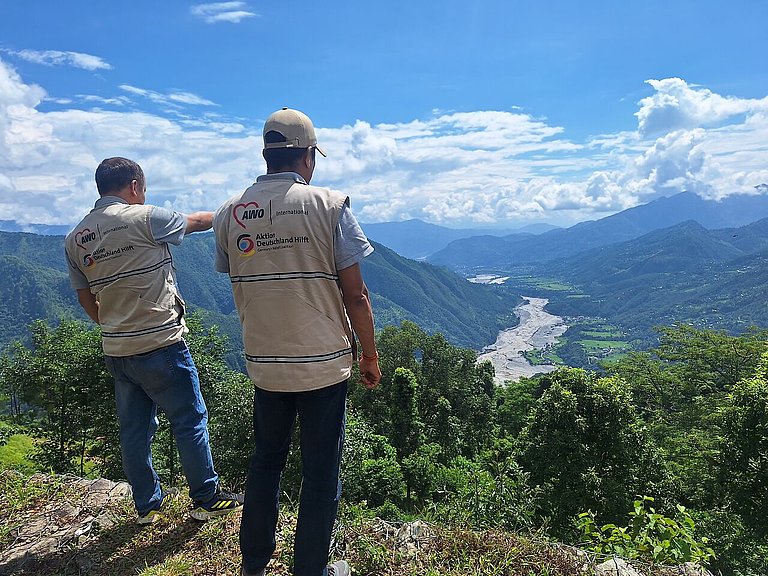
Rapid relief following the floods
The floods at the end of August 2026 destroyed homes, roads and bridges in northern Nepal, affecting people in hard-to-reach regions in particular. At least 1,450 people have died, and thousands are missing.
AWO International has had its own regional office in Nepal since 2009 and maintains a strong local network. This enabled us to take immediate action and provide on-the-ground assistance: emergency aid reached the first affected people within 72 hours. In the first week, we supported around 500 families with food supplies to last approximately one month, solar power systems, household and hygiene items, as well as psychosocial support.
Reaching remote communities was particularly important: using helicopters – made possible by the support of the Nepalese government – relief supplies were able to reach areas that were no longer accessible by road following the disaster.
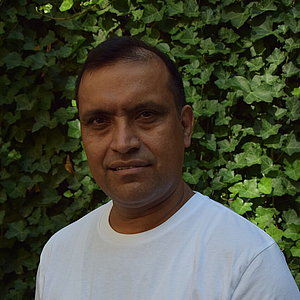
Disasters exacerbate existing vulnerabilities: the loss of income, homes and infrastructure can force people to migrate. That is why AWO International combines emergency aid, reconstruction and long-term development in close coordination with local partner organisations and authorities.
Surendra Gautam
Head of AWO International’s South Asia Regional Office in Kathmandu, Nepal
Reconstruction with perspective
Even after the initial emergency aid has been provided, AWO International will remain active on the ground, supporting the affected communities in their reconstruction efforts and accompanying around 2,185 people on their journey back to a safe life: safe temporary accommodation is being built for more than 150 families, where they can find shelter again after losing their homes. 200 households will gain access to clean drinking water, and over 250 families will be supported in gradually rebuilding their livelihoods.
Equally important is the emotional processing: more than 500 people will receive professional psychosocial support. Together with others affected, they can talk about their experiences, share their grief and fears, and find strength together for the time ahead.
A long-standing partnership with future
We are delighted by Dr Kofler’s keen interest in our work on the ground and the challenges involved in reconstruction. For us, this visit is a great honour and an important opportunity to highlight our long-standing partnership with the BMZ and our commitment in Nepal. We would like to extend our warmest thanks to Dr Bärbel Kofler for the open dialogue, her interest in our work and her appreciation of our teams on the ground.
You might also be interested in

More than Return: New Perspectives for Nepali Labour Migrants
Hundreds of thousands of Nepalis work abroad or migrate seasonally within the country in search of work. Return often doesn't mean a fresh start — but new uncertainty. Together with our partner organisation FORWARD, we support migrants and their families on the path to a self-determined future.
more information
Humanitarian action
Earthquakes, floods or droughts: We work with local and international partners to provide rapid and effective assistance in the event of a disaster. For instance, we distribute food and hygiene kits, and treat the injured in mobile clinics. We also help to rebuild houses and social facilities.
more information
Together Against Hunger for a Sustainable Future
In Syria, women and their families suffer most from the aftermath of war, displacement, and economic hardship. Many return after years of displacement to find destroyed homes and fields, plus collapsed infrastructure. Access to sufficient, healthy food is barely assured. That's exactly where our project steps in: We help the most affected women and their families become self-sufficient and build prospects for the future.
more information