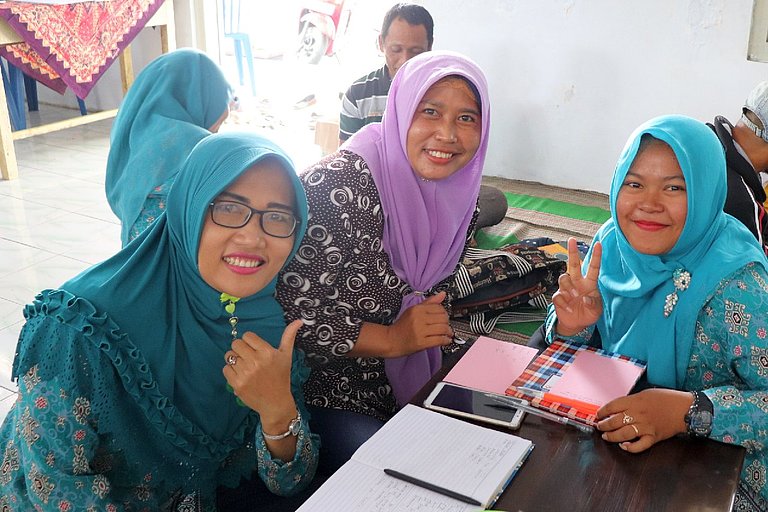
Blitar and Ponorogo, districts in East Java Indonesia, are wracked with poverty and offer limited opportunities for locals to make a decent living. Many individuals facing limited economic opportunities eventually end up seeking employment abroad in informal sectors like domestic work and plantations to improve their situations back home. These areas often operate outside of legal and regulatory frameworks. And while Indonesia has enacted measures to protect these individuals, ensuring its proper local enforcement and management has been challenging. AWO International and Institute for Education Development, Social, Religious, and Cultural Studies (INFEST) recognizes the complexity of this issue and have been aiming to improve the protection for migrant workers and their family members by expanding its comprehensiveness since 2018.

Most Indonesian migrant workers come from rural areas that have long been neglected in local development agendas. Activating their potential can directly contribute to strengthening these regions. This project empowers migrant workers and their families to serve as catalysts for change, improving the socioeconomic conditions of their communities and their country.
Nisrina Muthahari, Project Officer of our project with INFEST
Advise, inform and educate
Our partnership is dedicated to enhancing migrant workers’ and their families’ lives through a comprehensive approach that includes socio-economic and legal protection. Among many things, the community-based organizations that we are engaging with are enlightened on relevant development processes and equipped to lobby. They are taught the necessary knowledge and skills to campaign better for safe migration and mainstream labor migration policy and management improvement. We are also supporting the development of business potential, with the goal of helping set up a cooperative to further promote their financial stability and self-sufficiency.
Milestones and Future Plans
In our effort to empower migrant workers and their communities, significant strides have been made in the last few years. Some local regulations on migrant protection and standard operating procedures on case handling have been drafted and passed. This has come out of community group members’ active participation in planning sessions and drafting of the policies alongside local government officials, while also working collaboratively with other stakeholders. Notably, the Blitar district has launched a socio-economic program specifically aimed at uplifting migrant workers, further solidifying the commitment to enhancing their well-being and fostering a supportive environment for their success.


Projectinfo
| Place/Region | Blitar and Ponorogo, Java, Indonesia – specifically the following villages: Bringinan Village, Gelanglor Village, Pondok Village, Karangpatihan Village, Ngendut Village, Pandanarum Village, Gogodeso Village, Jatinom Village, Lorejo Village, and Sumbe |
|---|---|
| Partner | Institute for Education Develoment, Social, Religious, and Cultural Studies (INFEST Yogyakarta) https://www.infest.or.id/ |
| Activities |
|
| Duration | 01 January 2024 to 31 December 2026 (cooperation since 2018) |
| Budget | 203,000 EUR (3 years) |
| Sponsor | German Federal Ministry for Economic Cooperation and Development (BMZ) |
You might also be interested in

Strengthening joint efforts to protect the rights of Indonesian migrant workers
Although laws and international conventions exist to protect Indonesian migrant workers, their implementation on the ground is inadequate. Together with its Indonesian partner organisation Migrant CARE, AWO International campaigns for the rights of Indonesian migrant workers.
more information
Building Bridges for Indonesian Migrant Workers’ Security
Limited socio-economic opportunities in West Nusa Tenggara (NTB) drive thousands to seek work abroad for better prospects. However, many go undocumented and unaware of their rights, ending up abused and exploited. AWO International and PPK aim to ensure migrants are properly protected and have alternative livelihood options upon their return home.
more information