The region is suffering from the long-term effects of civil war and the challenges of reconstruction. This has put severe pressure on natural resources: land degradation, deforestation and the climate crisis are making it increasingly difficult to grow food, leading to growing food insecurity. At the same time, the increasing use of agricultural land by both refugees and host communities is worsening the situation and contributing to conflicts.
Collective learning for sustainable development
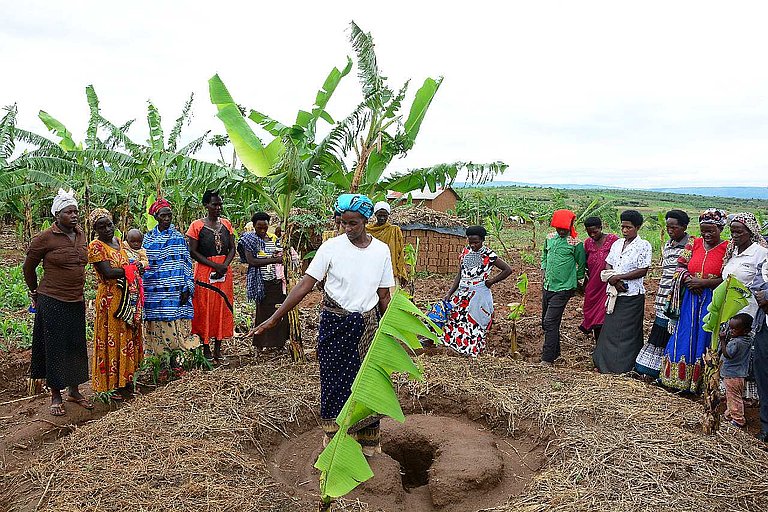
In this challenging environment, we encourage collective learning. In groups, farmers establish kitchen gardens together, receive seeds and fruit trees, and gain knowledge about healthy nutrition, climate-resilient farming, and gender equality. These groups also act as savings groups - an important contribution to economic stability, especially in times of crisis.

In Uganda, men usually take the lead and make the decisions. That's why it's important to empower women and make them aware of their rights. I firmly believe that everyone should have equal opportunities - every voice must be heard. Sustainable development can only succeed when all genders are equally involved in key decisions about resources.
Gertrude Nalubinga, member of staff at UCOBAC
Community-based learning exchange groups bring together representatives from refugee camps and local communities to engage in dialogue, build trust and develop joint solutions to conflicts. Local health teams and community facilitators also work to increase knowledge of sexual and reproductive health and advocate against gender-based violence - with the aim of promoting women's empowerment and participation.

The project team of UCOBAC coordinates the activities directly on site and maintains close communication with the regional office in Kampala and the communities.


Women work together to plant nutritious varieties for their own use and for sale.


Projectinfo
| Place/Region | Lamwo District, Palabek Ogili and Palabek Gem refugee camps |
|---|---|
| Partner | Uganda Community Based Association for Women and Children Welfare (UCOBAC) |
| Activities |
|
| Duration | January 2026 – December 2028 |
| Budget | 266.416€ |
| Sponsor | Federal Ministry for Economic Cooperation and Development (BMZ) |
You might also be interested in

Growing together
The Isingiro district of Uganda is home to many refugees from neighbouring countries. Together with our partner organisation COVOID, we are strengthening the food security of refugees and local communities, reducing poverty, and helping people face the challenges of the climate crisis.
more information